
Workshop
The Stories School Told Us: Healing Educational Wounds and Re-Writing the Narrative
Saturday 20th March 2027 – 9am to 5pm
Sunday 21st March 2027 – 9am to 3pm
Over two days, this workshop offers an opportunity to reflect on your own educational journey and consider how it may continue to shape your beliefs, relationships, and professional practice. Together, we’ll explore the unconscious messages we received about who we needed to become in order to belong, be valued, or succeed. We’ll also consider how these messages continue to influence the way we learn, teach, facilitate, and relate to others today.
Alongside this personal exploration, we’ll examine what it means to create learning environments that are rich in permission—spaces where authenticity, curiosity, psychological safety, and meaningful connection can flourish. We’ll reflect on how educational wounds can be carried into the environments we lead, teach, facilitate, or participate in, and how we can avoid unintentionally recreating the very dynamics that may once have limited or harmed us.
Mill House, Suffolk

Course overview
“When the child’s world is interrupted by the teacher, a rupture is created in which the child has the opportunity to turn up as their true self in relation to the world.” Giles Barrow
For many of us, education has shaped far more than what we know. It has influenced how we see ourselves, how we relate to others, and what we believe we need to do in order to be accepted, successful, or worthy.
When learning takes place within rigid systems and hierarchical structures, it can leave us questioning whether we were ever “good enough” in the first place. Rather than nurturing growth, educational experiences can create wounds that stay with us long after we’ve left the classroom.
These experiences are rarely just individual. Across generations, educational wounds have become embedded within our culture. They are often normalised, rewarded, and unknowingly passed on through ideas about intelligence, achievement, behaviour, and belonging. Whether you’ve experienced education as a student, teacher, practitioner, leader, or parent, you’ve likely encountered these messages in some form. This raises important questions: How might we unknowingly continue these patterns? And what becomes possible when we begin to recognise and challenge them?
Over two days, this workshop offers an opportunity to reflect on your own educational journey and consider how it may continue to shape your beliefs, relationships, and professional practice. Together, we’ll explore the unconscious messages we received about who we needed to become in order to belong, be valued, or succeed. We’ll also consider how these messages continue to influence the way we learn, teach, facilitate, and relate to others today.
Alongside this personal exploration, we’ll examine what it means to create learning environments that are rich in permission—spaces where authenticity, curiosity, psychological safety, and meaningful connection can flourish. We’ll reflect on how educational wounds can be carried into the environments we lead, teach, facilitate, or participate in, and how we can avoid unintentionally recreating the very dynamics that may once have limited or harmed us.
Drawing on the work of educational thinkers, including Kirsten Olson, alongside both established and emerging Transactional Analysis concepts, this workshop combines theory with reflection and practical application. It offers an opportunity to deepen your understanding of educational experience, strengthen your relational practice, and imagine new possibilities for learning that support both growth and healing.
Learning opportunities
During the workshop, you will have the opportunity to:
- Reflect on the lasting emotional and relational impact of your own educational experiences.
- Recognise unconscious beliefs and survival strategies that may have developed through schooling.
- Explore the messages you received about intelligence, achievement, belonging, and self-worth.
- Consider how educational experiences continue to influence your relationships and professional practice.
- Increase awareness of how systems, hierarchies, and cultural narratives can be unconsciously repeated.
- Explore the principles of creating permission-rich learning environments.
Apply Transactional Analysis concepts to educational and relational contexts. - Develop practical ways of fostering authenticity, curiosity, connection, and psychological safety in learning spaces.
Facilitator
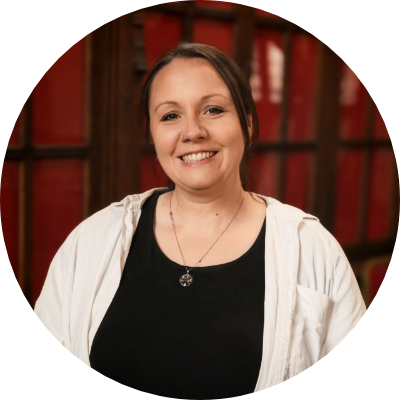
Cat Cornthwaite, PTSTA (E), is an Educational Transactional Analyst based in High Peak, Derbyshire. With over 15 years’ experience in secondary education, teacher development, and educational practice across the UK and internationally, Cat is passionate about creating more relational, humane, and transformative approaches to learning. Her work encourages people to rethink educational experiences and develop learning environments where both individuals and communities can thrive.
Register Your Interest
If you are interested in The Stories School Told Us then I’d love to hear from you.